

SAP landscape architecture review: 7 signs your design is creating operational debt
Operational debt in SAP landscapes accumulates one reasonable decision at a time. The hotfix transport route was created during an emergency and made sense then. The direct RFC connection was added when the middleware was unavailable and it worked, so it stayed. The authorization role was copied from the previous consultant’s setup because building one…
SAP Managed Services pricing models: what MSPs should include in their monitoring stack
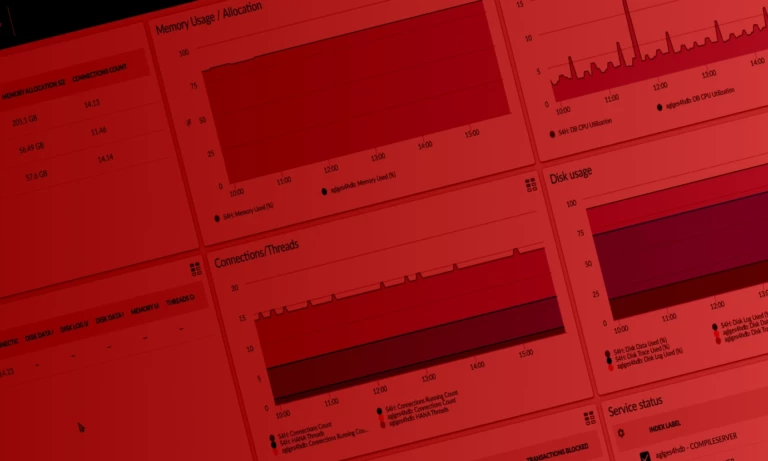
The monitoring stack is not a delivery cost in SAP managed services. It is the risk management layer that determines whether the contract is profitable. Every P1 incident that could have been detected an hour earlier costs three to six hours of unplanned engineering time at emergency rates. Every SLA breach opens a penalty clause…

SLA observability in SAP: measuring what you promised, not just what you ran
The SLA says 99.9% availability. Last month the system was available for 99.92% of measured time, technically exceeding the commitment. During the remaining 0.08%, the financial close batch run failed to complete by its agreed deadline. The SLA dashboard showed green. The finance director received the same report two hours late and missed the board…

SAP change control monitoring: tracking configuration drift before it becomes an incident
Most SAP configuration drift is not caused by unauthorized access. It is caused by authorized users making changes for legitimate reasons that are imperfectly documented and never reversed. A Basis engineer who increases the dialog work process count in RZ10 during an incident and solves the problem. A consultant who unlocks the production client to…
SAP integration hub design: how middleware architecture affects monitoring coverage
Middleware is introduced into SAP integration landscapes for good technical reasons: decoupling systems, translating protocols, centralizing error handling, enabling message transformation. None of those benefits show up in the architectural discussion about monitoring. What also gets introduced, without being explicitly evaluated, is a set of new monitoring blind spots. A hub that processes messages correctly…
Capacity planning in SAP environments: using monitoring data to anticipate infrastructure needs
Most SAP operations teams are good at monitoring what is happening now. They alert on thresholds, respond to incidents, and tune configurations based on observed behavior. What is less common is using that same monitoring data to answer a different question: what will we need in six months, and when do we need to start…

SAP RFC security monitoring: detecting unauthorized remote function calls in real time
RFC is the most powerful and least monitored execution pathway in most SAP landscapes. A user who has authenticated via an RFC connection and holds S_RFC authorization can call function modules that read any database table, create and modify user accounts, change system configuration, and execute transactions, none of which appear in the business process…

Annual SAP health check guide: 30 questions to assess your landscape before year-end
Year-end in SAP is categorically different from any other operational period. Financial period-close runs that only execute once a year. Batch jobs that have not been tested since last December and may have changed in runtime because a year’s worth of data has accumulated. Auditor access to systems during the reporting sprint. A business that…
SAP agentless monitoring architecture: how it works and why it matters at scale
Installing monitoring software on a production SAP system creates a dependency that becomes visible at the worst possible time. The SAP kernel is patched. The monitoring agent, which sits on the application server reading low-level process data, is not compatible with the new kernel version. The monitoring tool goes dark for that system while the…

What replaces SAP Solution Manager? A modern SAP monitoring alternative with Redpeaks
If your organization relies on SAP Solution Manager primarily for SAP monitoring, alerting and operational visibility, Redpeaks can replace that monitoring layer with a modern, agentless SAP observability platform. SAP Solution Manager 7.2 mainstream maintenance ends on December 31, 2027, which means organizations still depending on SolMan need to decide how they will monitor their…
SAP Cloud ALM vs Third-Party SAP Monitoring: Which Approach Should You Choose?
SAP Cloud ALM and third-party SAP monitoring platforms solve overlapping but different problems. SAP Cloud ALM is SAP’s strategic application lifecycle management platform and includes operations capabilities such as health, integration, job, business process and user monitoring. Third-party SAP observability tools typically focus more specifically on deep technical monitoring, cross-platform observability and integration with enterprise…
SAP Alert Configuration best practices : reducing noise without missing critical events
The most dangerous alert configuration is not one that misses events. It is one that fires so often for non-events that nobody trusts it anymore. When the operations team has learned to ignore the monitoring inbox because three-quarters of what arrives there is noise, the critical event arrives in the same channel and receives the…
SAP HANA sizing and monitoring guide : what to measure after you go live ?
The initial HANA sizing for an S/4HANA system is done before anyone knows what the actual workload looks like. The sizing document produced during a migration project is an educated estimate: source system data volume converted to projected HANA column store requirements, user count projections multiplied by per-user memory factors, batch workload estimates based on…
SAP Basis team onboarding guide : setting up monitoring from day one
You have system access. You may or may not have documentation. The previous Basis engineer left either last month or three years ago, and what they documented either does not exist or describes a landscape that has drifted significantly from the current reality. The business knows the system is running. They do not know how…
SAP BusinessObjects monitoring : ensuring report delivery and user experience
A financial controller opens the daily revenue dashboard at 07:30 every morning. The report is always there, always populated, always showing last night’s data. Until one Wednesday, it is there but empty. No error message. The scheduled instance shows status Success in the Central Management Console. The report ran, it just delivered no data. The…
SAP NetWeaver performance monitoring: key metrics for stable ABAP environments
There is a category of SAP performance problem that does not appear in HANA metrics. HANA memory is within range. Database response times are normal. CPU on the database host is unremarkable. And yet, users on one application server instance are reporting intermittent slowness that comes and goes without any obvious correlation to system load….
SAP S/4HANA Migration Monitoring Checklist: 20 Points to Validate Before and After Go-Live
Most S/4HANA go-live checklists are project management artifacts: task owners, completion dates, sign-off columns. They track whether things were done. They do not verify whether the system is actually healthy at each stage of the migration. This checklist is different. Each of the 20 points below is a monitoring-specific validation: something you confirm by looking…
SAP work process monitoring: diagnosing bottlenecks before users feel them
A SAP dialog work process pool is a fixed resource. The number of dialog work processes on an application server instance is configured at installation and does not change during operation. When they are all occupied, the next user request does not get a thread from a dynamic pool or a spawned process: it waits….
SAP interface monitoring: detecting silent failures before they reach the business
An RFC destination can return a successful connection test in SM59 at 09:00 while the system on the other end stopped processing incoming calls at 07:30. The test checks whether a network path exists. It does not check whether anything on the receiving end is running, reading, or posting the data it receives. You will…
Redpeaks and Elastic Join Forces to Accelerate SAP Observability
As SAP customers prepare for the end of SAP Solution Manager mainstream maintenance in 2027, organizations are facing a critical challenge: how to ensure reliable, scalable, and cost-efficient monitoring for mission-critical SAP landscapes. To address this transformation, Redpeaks and Elastic are initiating a strategic partnership focused on next-generation SAP observability. Together, Redpeaks and Elastic combine deep SAP operational expertise…
S/4HANA go-live readiness guide : monitoring coverage to put in place before cutover
Most S/4HANA monitoring discussions start the week after go-live. The system is in production, users are reporting slowness, and the project team is scrambling to understand what is happening on a platform they are running for the first time under real load. At that point, monitoring is reactive by definition. The window for proactive coverage…
SAP HANA Database Monitoring : the metrics that predict problems before they happen
Log volume full. The message appears in the system log at 14:22 on a Wednesday. By 14:23, the HANA database has performed an emergency stop. No prior alert, no gradual degradation, no warning visible to users before the sessions dropped. The log volume had been growing steadily for three weeks. Nobody was watching it. That…

SAP high availability architecture : patterns that hold under real production pressure
The most dangerous SAP high availability configuration is one that has never been tested. It looks correct in the architecture diagram, it passed the go-live review, and everyone on the team is reasonably confident it would work if something went wrong. But it has never actually failed over, so nobody knows for certain whether the…
SAP monitoring platform evaluation checklist : 12 questions to ask before you choose
Most SAP monitoring evaluations go wrong before the first demo. The team defines requirements at a high level, schedules presentations from three vendors, watches the same polished slides about real-time visibility and intelligent alerting, and then tries to compare platforms that all look broadly similar on paper. The questions that would actually reveal the differences…
SAP background job monitoring : what to track and how to alert ?
A background job finishing with status FINISHED does not mean it did what it was supposed to do. That is probably the most important thing to understand before setting up any monitoring on SAP batch processing, a distinction most alerting configurations get wrong. Background jobs in SAP carry a disproportionate amount of business risk relative…

Redpeaks accelerates global expansion with launch of Redpeaks Singapore (APAC)
In a significant step forward in its international growth strategy, Redpeaks has officially expanded its footprint into Asia with the creation of Redpeaks Singapore, establishing a strategic antenna for the APAC region. This move marks a new phase in the company’s evolution, from a Europe-centered SAP observability expert to a truly global player supporting enterprises…
Redpeaks and TrueWatch Join Forces to Deliver Unified Enterprise Observability
As enterprise IT environments become more distributed and complex, maintaining a unified view across the entire technology stack is no longer optional: it’s essential. For organizations running critical SAP workloads, the disconnect between core applications and underlying infrastructure is often where performance issues and downtime originate. To address this challenge, Redpeaks has partnered with TrueWatch…
Redpeaks Expands Its Observability Integration Platform with New SAP ALM Plug-in
At Redpeaks, we continue to push the boundaries of SAP observability by reinforcing what makes our platform unique: seamless integration across the entire observability ecosystem. Today, we are proud to announce the launch of our new SAP ALM Plug-in, further extending our ability to connect SAP environments with the leading platforms on the market. A…
SAP Monitoring: how do modern platforms improve real-time visibility in enterprise landscapes?
There is a version of SAP monitoring that exists mostly as a compliance exercise: a tool is installed, thresholds are set to defaults, and a dashboard sits open on a screen that nobody watches. Alerts fire when something is already broken. Post-incident reviews start by admitting that the warning signs were there they just were…
Designing Resilient SAP Landscapes for Hybrid Cloud and S/4HANA Deployments
Most SAP architecture decisions look solid on a diagram. The problems emerge six months after go-live, when the reality of day-to-day operations, cross-system dependencies, and cloud latency starts bending the original design in ways no one fully anticipated. Resilience in a hybrid SAP architecture is not about adding redundancy on top of a fragile design….
How MSPs Can Deliver Proactive SAP Managed Operations Using Intelligent Monitoring
SAP environments do not forgive slow reactions. A degraded batch process at 2 AM, a memory leak silently consuming resources, an interface failure discovered only when users start complaining these are the incidents that cost MSPs client trust and SLA credits. The question has shifted: it is no longer whether to monitor SAP, but whether…

SAP mission-critical observability: why is Redpeaks the gold standard?
Protect your business running on SAP with a solution that’s incredibly simple to deploy, preconfigured, reliable, and open to any integration. In an era where downtime equals lost revenue and weakened trust, organizations running SAP landscapes, whether hybrid, cloud-native, or on-premises, must ensure maximum visibility, performance, and resilience across their mission-critical systems. Enter Redpeaks: a…